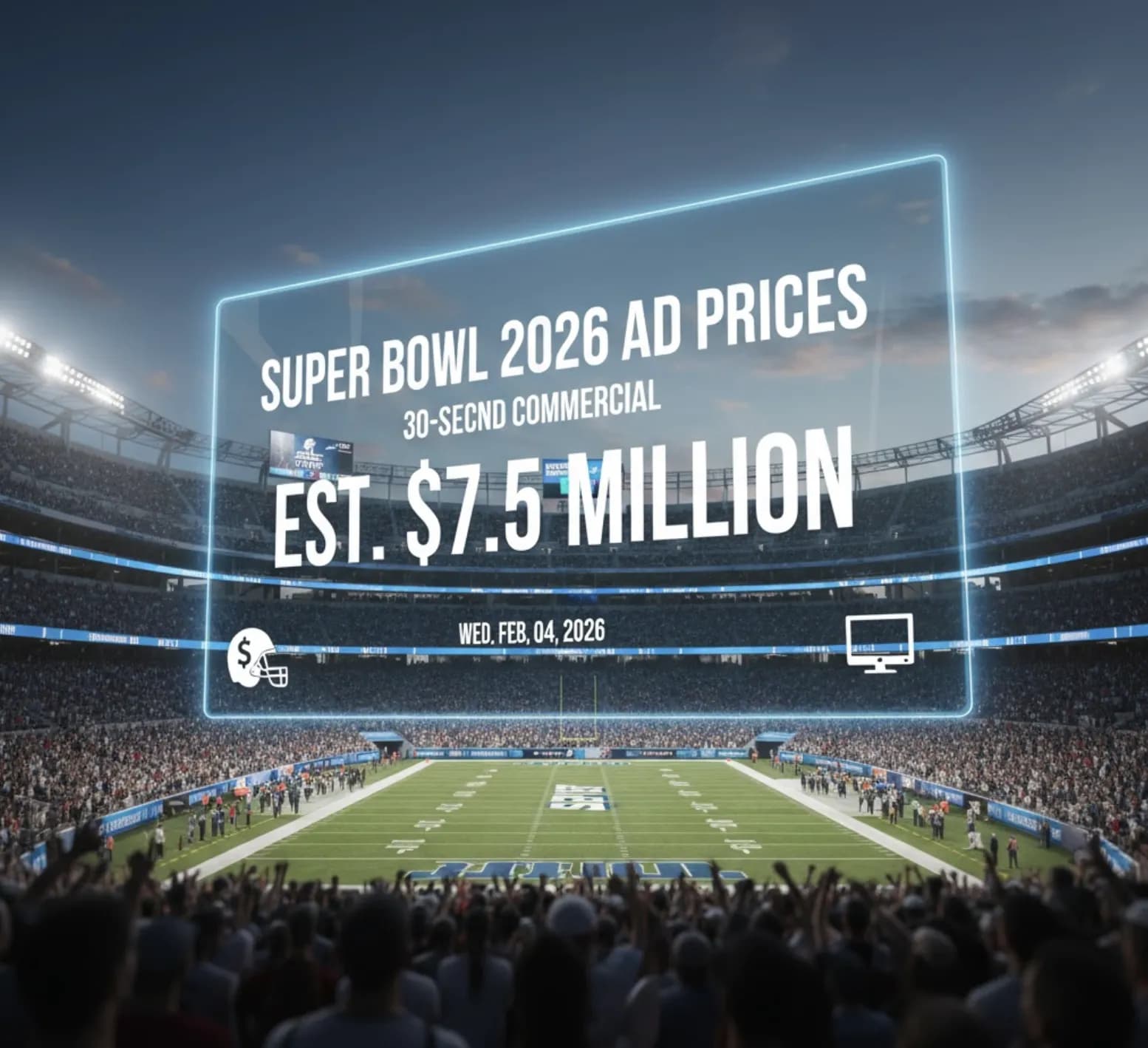
Super Bowl 2026 Ad Prices: How Much a 30-Second Commercial Costs
Super Bowl advertising keeps getting more expensive because it keeps delivering something no other platform can: mass attention in real time. In an era where most ads can be skipped, blocked or ignored, the Super Bowl forces the entire country to watch together.
For Super Bowl 2026, a standard 30-second TV commercial is expected to cost between $7.5 million and $8 million, with some premium slots reportedly reaching $10 million.
That figure reflects more than simple inflation. In a media landscape dominated by streaming and short-form content, the Super Bowl remains one of the very few moments that can still guarantee over 100 million people watching live at the same time. That kind of unified audience is almost impossible to buy anywhere else, and brands know it. As a result, total advertising revenue for the game is projected to land between $650 and $700 million, spread across roughly 75 to 80 ad slots.
Prices have risen steadily for decades, but the jump toward $8 million highlights how rare and valuable mass attention has become. In 1967, the first Super Bowl commercial cost just $37,500. Nearly 60 years later, that same half-minute of airtime is worth more than 200 times as much.
On the surface, spending nearly $10 million for 30 seconds sounds irrational. But the logic is simple: scale, attention and cultural relevance. No other TV event delivers a live audience of this size, and no other set of commercials is treated like entertainment. Viewers talk about Super Bowl ads, share them online and actively search for them after the game. That extends the life of a campaign far beyond Sunday night.
For many brands, the return is not measured only in short-term sales. The real value comes from long-term effects such as:
- Increases in brand awareness
- Strong boosts in social media engagement
- Earned media from press coverage and viral sharing
Modern Super Bowl campaigns are also built to work across platforms. The TV spot is just the launch moment. Brands support it with social media teasers, influencer content and digital follow-ups, turning one ad into a multi-week marketing wave.
Industry expectations for 2026 suggest that automotive, technology, streaming platforms, snacks and beverages will dominate the lineup, alongside pharma and wellness brands. Smaller companies are mostly priced out of national spots, though some still appear through regional ad buys at much lower cost.
Creatively, the trend continues toward cinematic storytelling, celebrities, nostalgia and interactive elements such as QR codes or live voting. The Super Bowl has effectively become the Oscars of advertising, where creativity is judged almost as much as the game itself.

Alejandro Huerta
Content Verification & Editorial Coordinator
Responsible for reviewing and structuring all published content. Ensures information is accurate, up to date, and useful before publication. Focuses on what really matters before signing up: strengths, weaknesses, and key conditions.
Comments & Discussion
Share your thoughts about this article or discuss with other readers